
When a SaaS buyer asks ChatGPT to recommend a project management tool for a 200-person engineering team, your brand either appears in that answer or a competitor’s does. There’s no page-two equivalent in AI-generated responses — you’re cited or you’re absent. For tech companies whose buyers now routinely use AI tools in vendor research, that binary has direct pipeline consequences.
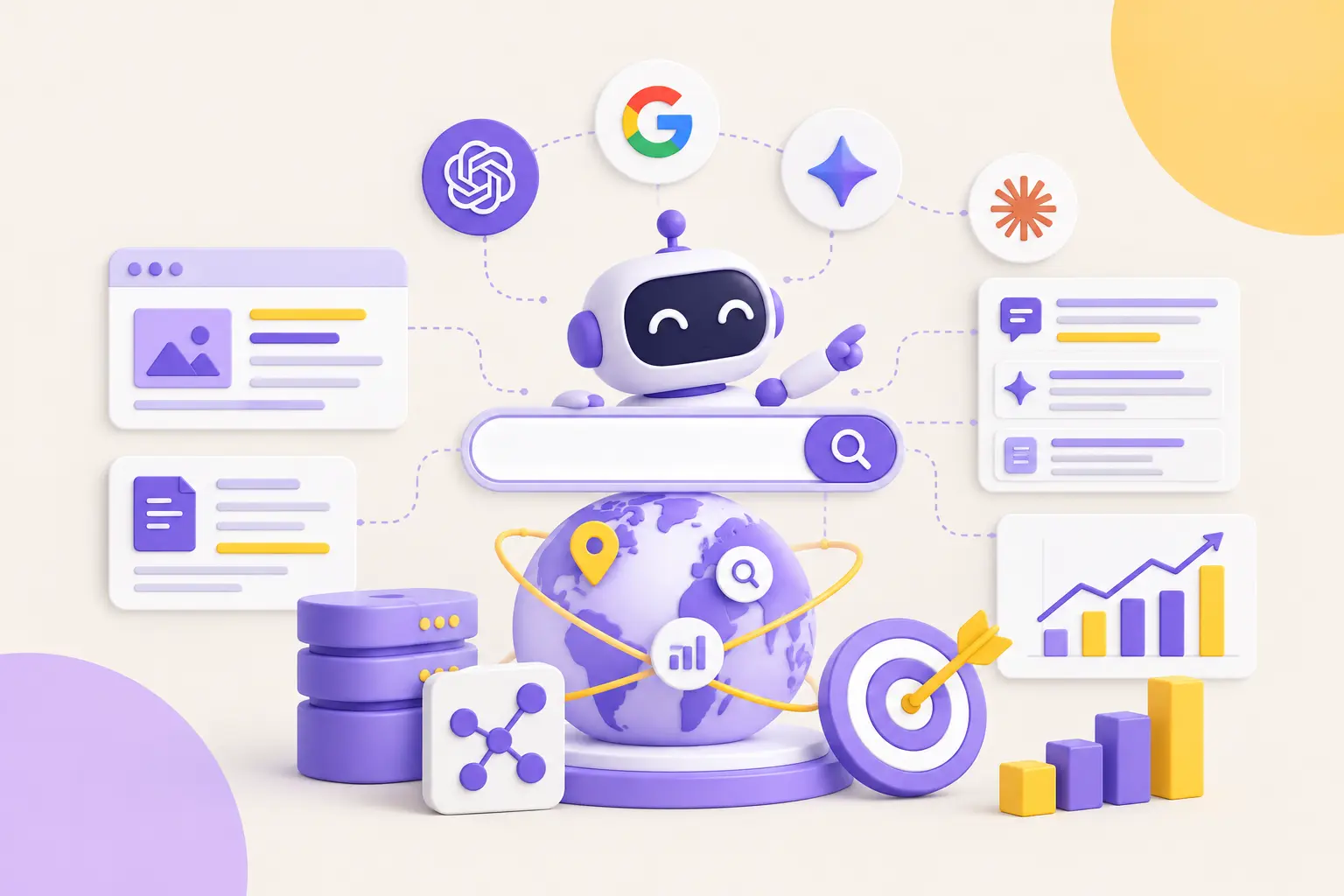
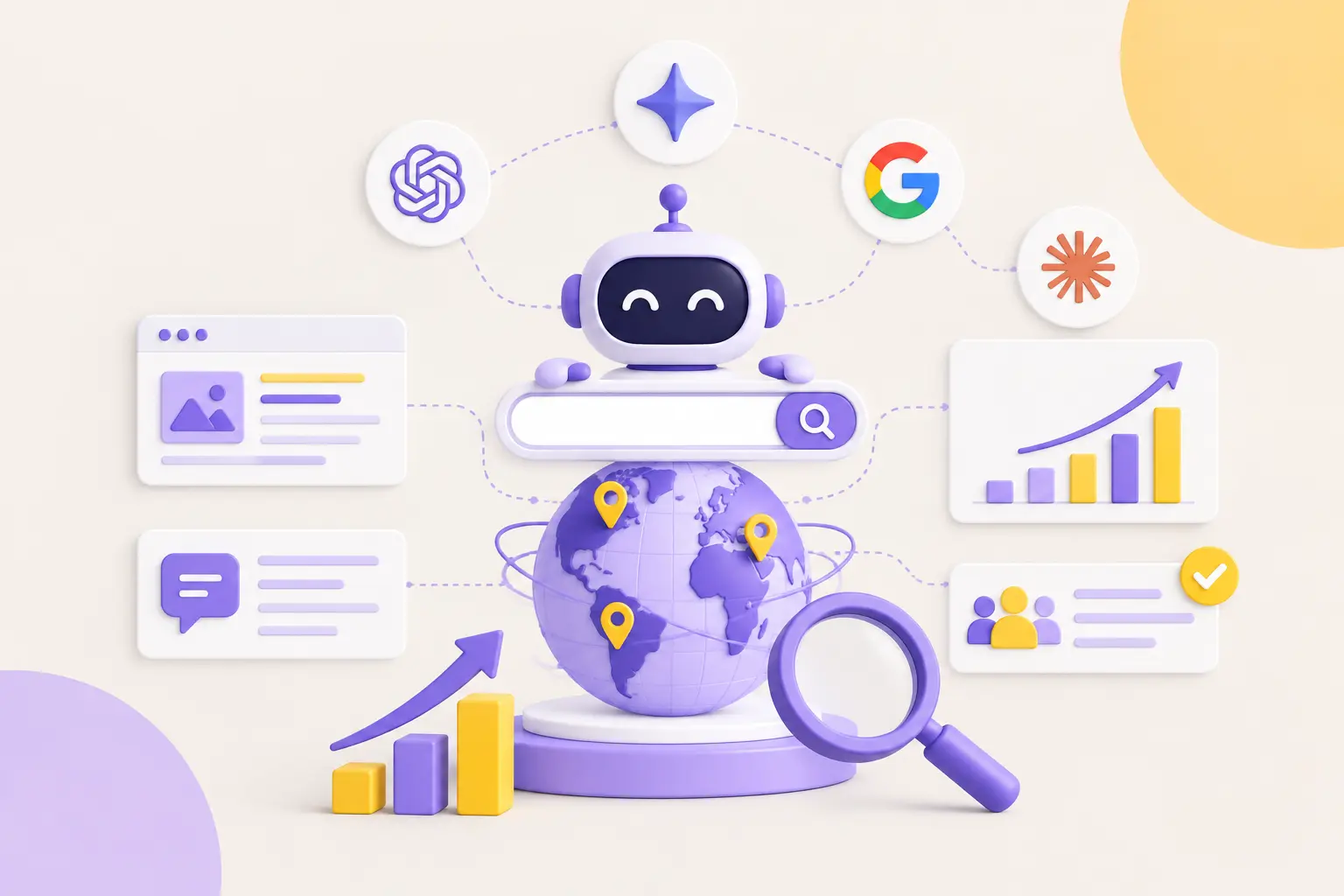
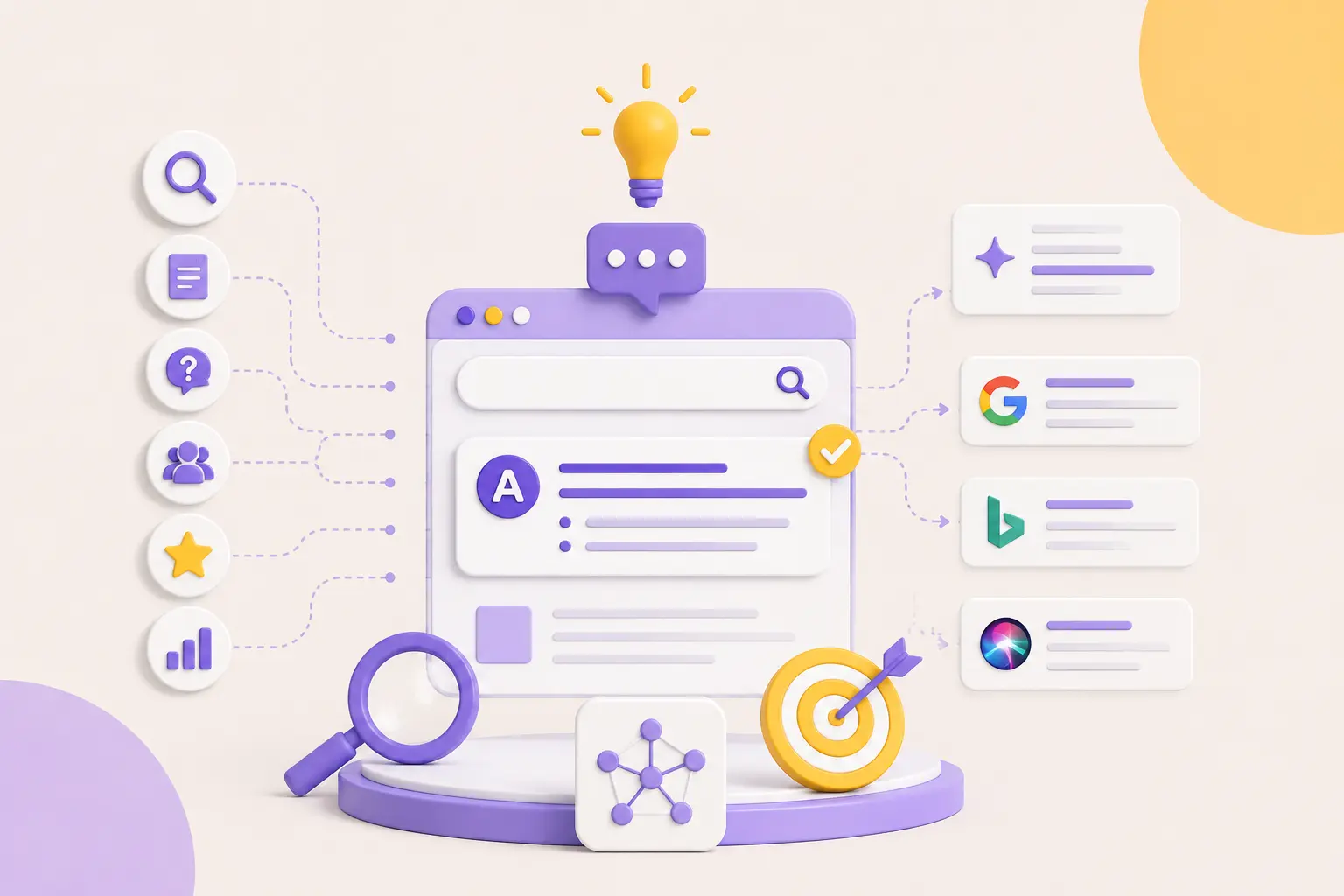
This guide is the platform-specific GEO playbook for SaaS and tech brands: how ChatGPT, Gemini, Claude, and Perplexity each retrieve and cite content, what optimisation levers work on each platform, and the cross-platform strategy that builds compounding AI brand visibility.
| 3 in 5B2B tech buyers use ChatGPT, Perplexity, or Gemini when researching tools or vendors | 82%of AI-generated vendor answers cite fewer than 5 distinct sources across a category | < 12%of SaaS companies have taken any deliberate action to improve their AI brand visibility |
1. Why GEO matters more for SaaS & tech than for any other B2B category
Two things are simultaneously true about SaaS buyers in 2026: they do more independent research than any other buyer category, and they are the heaviest users of AI research tools. A developer evaluating an API management platform, a growth lead comparing product analytics tools, or a CTO assessing data pipeline vendors — all of them are running AI-assisted research as a default step in their evaluation process.
This creates a GEO opportunity specific to tech. When your buyer opens Perplexity and types “best observability platforms for Kubernetes environments” or asks ChatGPT to compare API gateways for microservices, the answer they receive shapes their initial vendor shortlist before they’ve visited a single website. Being cited in that answer is being placed on the shortlist. Not being cited is being excluded from consideration at the earliest stage.
The category saturation problem compounds this. SaaS categories are crowded. In most established categories, the top 3–5 vendors cited in AI answers receive a disproportionate share of the research attention. The AI tools are acting as a filter, and that filter is increasingly set at the beginning of the buying journey rather than at the end.
| ✺ THE SOURCING REALITYAI tools cite a small number of sources for any given query. In most SaaS categories, the answers generated by ChatGPT, Perplexity, and Gemini draw from a pool of 10–20 regularly-cited sources. Getting into that pool is a one-time investment that produces compounding returns. Staying out of it means being absent from every AI-assisted research session your buyers run — indefinitely. |
2. How AI tools retrieve and cite content: the mechanics
Each platform retrieves content differently. The shared principle is retrieval-augmented generation (RAG): the AI fetches relevant content from the web or its index at query time, uses it as grounding context, and generates a synthesised answer. What varies is the retrieval source, the crawler used, and the signals that determine what gets selected.
| Platform | Retrieval source | Crawler / bot | Primary selection signal | Citation visibility |
| ChatGPT (with browsing) | Live web via Bing index + OpenAI’s own crawl | GPTBot | Bing ranking signals + content relevance to query | Source links shown on request; not always surfaced by default |
| Gemini | Google Search index (real-time) | Googlebot (shared with classic SEO) | Google’s existing ranking and authority signals | Sources shown as chips below the answer |
| Perplexity | Live web via own crawler + Bing | PerplexityBot | Content recency, structural clarity, domain specificity | Sources explicitly listed — most transparent of all platforms |
| Claude (web search) | Brave Search index | ClaudeBot / Anthropic’s crawler | Relevance and source reliability as assessed by Brave Search | Sources cited when search tool is active |
The practical implication: Gemini is the most directly influenced by classic Google SEO performance. A page that ranks well in Google organic has a meaningful head start for Gemini citation. ChatGPT’s browsing mode is influenced by Bing ranking signals, which correlate with but diverge from Google. Perplexity is the most open to content from domains with moderate authority, provided the content is specific, recent, and structurally clear. Claude’s web search is the least commonly used in practice but benefits from the same structural signals as the others.
3. Platform-by-platform guide
Each platform has distinct optimisation levers. Start with Perplexity (most accessible for mid-authority domains, most transparent about sources) and Gemini (closest to existing SEO investment). Add ChatGPT-specific tactics once the foundational work is in place.
| ChatGPTGPTBot | ❯ Bing index + OpenAI crawl → RAG synthesis → answer with optional source attribution |
What ChatGPT cites
ChatGPT’s browsing mode draws heavily from Bing’s index. This means Bing SEO signals matter here: pages with strong inbound links, clear meta data, and structured content rank better in Bing and appear more reliably in ChatGPT browsing results. Bing also indexes structured data more aggressively than is commonly assumed — Schema.org markup, FAQPage schema, and SoftwareApplication schema all influence how ChatGPT categorises and cites SaaS products.
ChatGPT’s base model (without browsing) draws on training data with a knowledge cutoff. For SaaS brands in established categories, training data inclusion matters for base-model responses. Getting your brand into frequently-cited, high-authority external sources — TechCrunch, The Verge, Product Hunt, G2 review aggregations, industry analyst reports — increases the likelihood of training data inclusion in future model versions.
Specific actions for ChatGPT visibility
- Submit your site to Bing Webmaster Tools and ensure Bing indexing is active. Many SaaS teams focus exclusively on Google and leave Bing unmanaged.
- Allow GPTBot in robots.txt explicitly: User-agent: GPTBot / Allow: /
- Implement SoftwareApplication schema on your product pages — this is the schema type ChatGPT uses to categorise software tools in comparative answers.
- Build coverage in sources ChatGPT’s training data encountered heavily: major tech publications, curated lists (e.g. “Best tools for [use case]” roundups), Product Hunt profile and launch coverage, and G2 category pages.
- Structure your product category definition consistently across your site, G2 profile, and Bing-indexed content. If ChatGPT’s answer about your category doesn’t include you, the category definition on your primary pages may be ambiguous.
| GeminiGooglebot | ❯ Google Search index (real-time) → Gemini LLM synthesis → answer with source chips |
What Gemini cites
Gemini’s retrieval is the most directly tied to classic Google SEO performance of any of the four platforms. It uses Google’s existing search index and ranking signals as its retrieval layer — which means pages that rank well in Google organic are the same pages Gemini considers most authoritative. The optimisation overlap is the highest here: investing in Google SEO is simultaneously investing in Gemini citation potential.
The distinction is in answer structure. Gemini generates a synthesised response and selects sources to display as chips below the answer. The pages selected as chips tend to be the ones with the clearest direct-answer structure relative to the query — not necessarily the highest-ranked pages overall. A page ranking position 4 with a strong direct-answer opening can appear as a Gemini source chip ahead of the position 1 page that buries its answer.
Specific actions for Gemini visibility
- Everything that improves Google SEO rankings improves Gemini citation potential. Prioritise pillar content on your core category terms, backlink acquisition, and Core Web Vitals on key pages.
- Add FAQPage schema to your product pages, comparison pages, and pillar content. Gemini draws heavily on FAQ-structured content for its synthesised answers.
- Place a direct 2–3 sentence answer to the primary category question immediately below the H1 on your product landing pages. Gemini extracts this text for its answer synthesis.
- Ensure your Google Business Profile is complete and consistent with your website’s Organization schema. Gemini uses Google’s Knowledge Graph to validate brand entities.
- Pursue Google’s “Featured Sources” positioning: pages that earn featured snippets in classic Google are reliably surfaced in Gemini answers on the same queries.
| PerplexityPerplexityBot | ❯ Live web crawl + Bing → real-time RAG retrieval → answer with explicit source list |
What Perplexity cites
Perplexity is the most transparent and the most accessible of the four platforms for brands with moderate domain authority. It shows sources explicitly and crawls the live web in real time — meaning recent, well-structured content from any domain can appear in answers, regardless of overall site DA. It is also the platform where SaaS buyers most commonly research tools, integrations, and vendor comparisons in a professional context.
Perplexity’s selection algorithm prioritises: content recency (recently published or updated pages rank higher in its retrieval), structural specificity (pages that directly answer the exact query rather than covering the topic broadly), domain topical focus (a domain that consistently covers one topic area is more likely to be retrieved for that topic than a generalist site), and parseable HTML (Perplexity’s crawler penalises heavy JavaScript rendering and will skip pages that don’t render cleanly).
Specific actions for Perplexity visibility
- Allow PerplexityBot explicitly in robots.txt: User-agent: PerplexityBot / Allow: /
- Publish a monthly or quarterly content update cycle on your most important pages. Perplexity weights recency heavily — a page last updated 18 months ago loses ground to a competitor’s updated version.
- Use clear, specific page titles and H1s that match how buyers phrase queries. “RevOps software for B2B SaaS” outperforms “The Revenue Operations Platform” as a Perplexity retrieval signal because it matches query phrasing more closely.
- Build integration and use-case pages at high specificity: “[Your product] + Salesforce integration,” “[Your product] for DevOps teams,” “[Your product] vs [Competitor] for enterprise.” These match the specific query types Perplexity users run.
- Get your brand on sources Perplexity crawls frequently: Hacker News discussions, Reddit threads in relevant subreddits (r/saas, r/devops, r/entrepreneur), Stack Overflow answers referencing your product, and niche industry newsletters that publish web-accessible archives.
| ClaudeClaudeBot / Anthropic crawler | ❯ Brave Search index (when web search is active) → synthesis → cited answer |
What Claude cites
Claude’s web search capability (available in Claude.ai) uses Brave Search as its retrieval backend. Brave’s index is smaller than Google’s or Bing’s but prioritises independent and privacy-respecting sources — which in SaaS contexts means it favours well-structured direct pages over aggregator and ad-heavy sites. This creates an opportunity for SaaS brands with clean, content-rich sites to appear ahead of G2 or Capterra in Claude-cited answers, which is unusual relative to the other platforms.
Claude’s base model (without web search) draws on Anthropic’s training data, which prioritises high-quality, reliable sources. For brand mentions in Claude’s base model responses, the same signals apply as for ChatGPT training data: authoritative external mentions, accurate company and product descriptions in reliable sources, and consistent entity representation across the web.
Specific actions for Claude visibility
- Allow ClaudeBot in robots.txt: User-agent: ClaudeBot / Allow: /
- Optimise for Brave Search indexing: clean HTML, fast load, no aggressive cookie walls or interstitials that block crawl. Brave Search submits via IndexNow — submit your sitemap via IndexNow to speed indexing.
- Produce long-form, high-specificity content with zero filler. Claude’s training data selection favours depth and accuracy over keyword density. A 3,000-word technical comparison guide outperforms a 700-word overview for Claude citation.
- Target independent tech publications and newsletters that Anthropic’s crawl systems are more likely to include: The Pragmatic Engineer, Lenny’s Newsletter (web archive), SaaStr blog, Indie Hackers, and niche vertical publications.
- Ensure your documentation and help centre are public and indexable. Claude is frequently used for technical tool evaluation and cites product documentation directly.
4. The GEO content stack: what gets cited and why
Not all content types carry equal weight in AI retrieval. The format and structure of a page determines how extractable it is — and extractability is the primary selection criterion across all four platforms.
| Content type | Citation frequency | Why AI tools cite it | GEO optimisation action |
| Category comparison pages(“Best X tools for Y”) | Very high | Directly matches the query structure buyers use when asking AI tools to compare options. Structured format (tables, criteria lists) is highly extractable. | Build your own comparison page with clear criteria table. Rank your product accurately. Include third-party tools in the comparison — one-sided comparisons get cited less than honest ones. |
| Integration and use-case pages(“[Product] for [use case]”) | High | Matches specific buyer queries about workflow fit. AI tools use these pages to answer “does X work with Y” and “is X good for Z teams” questions. | Build dedicated pages for your top 5 integrations and top 3 use cases. Use the query phrasing buyers use as the H1, not your internal naming. |
| Technical documentation (public) | High (especially for Claude and Perplexity) | Buyers evaluating technical tools ask AI to explain capabilities. Public docs are cited directly for capability questions. | Ensure docs are public, indexable, and linked from your main site. Add a basic meta description to doc pages — most documentation platforms omit this by default. |
| Original research and benchmarks | High | AI tools cite original data as a named source. “According to [Company]’s 2026 State of DevOps report…” is a citation pattern LLMs use reliably. | Publish one original data piece per quarter. Even a 200-customer survey with 5 findings qualifies. Ensure the data page has a clear title with the year and topic. |
| How-to guides with step-by-step structure | Moderate–high | HowTo schema and numbered step structures are extracted cleanly for procedural queries. | Implement HowTo schema on all step-by-step guides. Keep steps numbered, specific, and platform-named. |
| FAQ pages | Moderate–high | FAQPage schema creates extractable Q&A pairs that map directly to AI answer generation. | Add FAQPage schema to product pages, comparison pages, and pillar content. Write answers in 2–3 sentences each — the length AI extracts most cleanly. |
| Third-party review profiles(G2, Capterra, ProductHunt) | Very high | Review platforms have high domain authority and are trusted sources for AI tools. Your reviews, profile copy, and category placement on these platforms are cited independently of your website. | Claim and complete every G2, Capterra, and ProductHunt profile. Use the same category names, product description, and company description as your website. |
5. Entity signals that drive AI brand mentions
Entity clarity is the degree to which AI systems have an unambiguous, consistent picture of your company, product, and category. It is the foundational GEO investment — everything else amplifies a clear entity signal. A muddy entity signal produces inconsistent or inaccurate brand mentions that can actively damage the impression a buyer forms.
The four entity signals that matter most for SaaS
| ✺ ENTITY SIGNAL 1Company and product name consistencyEvery page, schema block, external profile, press release, and review must use identical company name, product name, and capitalisation. If your product is called “DataBridge”, every mention everywhere must be “DataBridge” — not “data bridge,” “DATABRIDGE,” or “the DataBridge platform.” AI systems aggregate signals and inconsistency creates ambiguity. | ✺ ENTITY SIGNAL 2Category definitionYour company must belong to a named, recognised category according to your own content and external profiles. “Revenue intelligence platform” is a category. “AI-powered insights tool for modern GTM teams” is marketing copy, not a category — and AI systems can’t place you in a comparison answer if they can’t identify your category. |
| ✺ ENTITY SIGNAL 3Founding and funding informationAI systems use verifiable company metadata — founding year, HQ location, funding stage, team size — to assess entity credibility. This information should be consistent across your website, Crunchbase, LinkedIn, and any press coverage. Conflicting data (different founding years in different sources) reduces AI confidence in your entity. | ✺ ENTITY SIGNAL 4Named leadership and thought leadershipAI tools are more likely to cite brands whose leadership has identifiable expertise signals: published content under their own name, LinkedIn articles, podcast appearances, or conference talks that AI crawlers encounter. A CEO whose name appears in 12 articles about your category is a stronger entity signal than one with no external presence. |
6. The SaaS-specific external profile playbook
For SaaS and tech brands, external profiles are GEO assets, not just brand presence. They are the sources AI tools cite directly and use to validate entity signals. Each profile below has a specific GEO function.
| Platform | GEO function | Optimisation action | Priority |
| G2 | Cited directly by ChatGPT, Gemini, and Perplexity for category comparisons and review sentiment. G2 category pages appear in AI answers for “best [category]” queries. | Complete every field. Category name must match your on-site category definition. Request reviews that mention specific use cases, integrations, and company sizes — AI extracts this specificity. | Critical |
| Capterra | High-DA source for comparison queries. Cited by ChatGPT browsing and Perplexity for software comparisons. | Mirror G2 profile content exactly. Keep pricing information current — outdated pricing in Capterra is a negative signal AI tools sometimes include in answers. | High |
| Product Hunt | ChatGPT’s training data and Perplexity index both include Product Hunt pages. Launch coverage and upvotes signal product credibility. | Complete your Product Hunt profile. Link to it from your website. If you haven’t launched, do so — the generated discussion and upvote count create a citation-worthy signal. | High |
| Crunchbase | Used by AI systems to verify company entity data: founding year, HQ, funding, team size. Inconsistency with your website creates entity ambiguity. | Claim your Crunchbase profile. Ensure every field matches your website exactly. Update whenever funding or headcount changes. | High |
| GitHub | For dev-tool and API-based SaaS: GitHub repo stars, README quality, and issues/discussion volume are signals that Perplexity and Claude cite for technical tool evaluation. | Make your GitHub README a full product page with use cases, installation instructions, and links to documentation. Treat it as a GEO landing page. | High (dev tools) |
| LinkedIn Company | Gemini specifically cross-references LinkedIn company data against Google’s Knowledge Graph. Inconsistent LinkedIn data creates a Gemini entity signal gap. | Ensure your LinkedIn company description, industry category, and employee count are current and match your website. | High |
| Wikipedia / Wikidata | Training data for all four AI platforms includes Wikipedia heavily. A Wikidata entry for your company provides a structured, AI-readable entity record. | Create a Wikidata entry for your company if one doesn’t exist. Ensure key fields (official name, website, founding date, category) are populated and accurate. | Medium |
| TechCrunch / tech press | Press coverage in major tech publications appears in training data for all platforms. A TechCrunch mention is a higher-authority citation signal than most company blog posts. | Prioritise press in TechCrunch, VentureBeat, The Verge, Hacker News front-page posts. A single well-placed article produces more GEO signal than dozens of self-published pieces. | Medium |
7. The brand mention audit: how to run it
Before optimising, establish your baseline. The brand mention audit tells you exactly where you stand across all four platforms, what AI systems currently say about you, and which inaccuracies or absences to address first.
| 01 | Run category queries on all four platformsFor your top 5 category keywords (e.g. “best API management platforms for microservices,” “top revenue intelligence tools for mid-market B2B”), query ChatGPT, Gemini, Perplexity, and Claude separately. Record: which vendors are mentioned, in what order, with what description, and which sources are cited. This is your competitive baseline. |
| 02 | Run direct entity queriesAsk each platform: “What does [Your Company] do?” and “What category does [Your Company] compete in?” Record the answers verbatim. Compare them against your own positioning. Inaccuracies indicate entity signal gaps on your site, in your schema, or in external profiles. Competitors incorrectly named as alternatives indicate category definition ambiguity. |
| 03 | Run comparison queriesAsk each platform: “[Your Company] vs [Top Competitor]” and “[Your Company] alternatives.” Record whether your brand appears as the subject, the comparison, or not at all. For Perplexity, note which sources are cited. These are the pages you need to have indexed and structured to own comparison-query citations. |
| 04 | Audit your crawler accessCheck your robots.txt against all four platform crawlers: GPTBot (ChatGPT), Googlebot (Gemini), PerplexityBot (Perplexity), ClaudeBot (Claude). Verify that each is explicitly allowed. Then use each platform’s developer tools or URL inspection equivalents to confirm your key pages are indexed. A page your crawler can’t access produces zero citation opportunity. |
| 05 | Log everything in a tracking spreadsheetCreate a simple spreadsheet: rows for each query, columns for each platform. Log citation status (cited as primary, cited as comparison, mentioned in passing, absent), answer accuracy, and source URL where visible. Rerun this audit monthly. The trend over time — not any single snapshot — is the GEO performance metric that matters. |
8. Measuring GEO performance
GEO measurement is partly quantitative and partly qualitative. Accept that upfront. The full value of AI brand mentions includes a portion that produces no direct click and therefore no GA4 session — structurally similar to the unmeasured impression value of billboard advertising. What is measurable is worth tracking rigorously.
| ✺ MEASUREAI referral trafficPerplexity and ChatGPT both pass referrer data when they send traffic to your site. In GA4, create a custom segment for sessions where the source contains “perplexity.ai” or “chat.openai.com.” Track session volume, pages landed on, and conversion rate monthly. AI-referred traffic typically converts at a higher rate than standard organic because visitors arrive with existing context from the AI answer. | ✺ MEASUREBrand mention rate (manual audit)From your monthly brand mention audit: what percentage of your top 10 category queries produce a citation of your brand across the four platforms? This is your primary GEO KPI. Track it as a monthly number. Movement here — up or down — is the leading indicator of GEO programme effectiveness. |
| ✺ MEASUREEntity accuracy scoreFrom the direct entity queries (“What does [Your Company] do?”), score accuracy across four platforms on a 1–5 scale: 5 = precise description, correct category, correct differentiators; 1 = incorrect category, missing or wrong product description. Track this quarterly. Score improvements correlate with entity standardisation actions. | ✺ MEASUREBranded search volume trendAI citation drives brand awareness that manifests as branded search volume in Google. Track branded keyword impressions in GSC monthly. A GEO programme gaining consistent AI Overview and Perplexity citations on category queries should produce branded search volume uplift within 60–90 days as buyers who encountered your brand in AI answers subsequently search for you directly. |
| ✺ MEASURECompetitor citation gapFor your top 5 category queries, track how many of the four platforms cite your top competitor vs. how many cite you. The gap is your GEO competitive position. Closing it is the programme objective. A brand cited on 3 of 4 platforms for a key category query has a significantly different market position than one cited on 0 of 4. | ✺ MEASUREPipeline influence (qualitative)Add “Have you used AI tools to research this category?” to your sales discovery or post-signup survey. If yes, ask which tool and whether they encountered your brand there. This closes the attribution loop that analytics cannot — and produces the executive-level evidence that GEO investment is influencing real pipeline. |
9. The 60-day GEO implementation roadmap
Ordered by impact-per-hour of effort. Complete each phase before moving to the next.
| 01 | Days 1–5: Audit and unblockRun the full brand mention audit across all four platforms. Check robots.txt for crawler access. Fix any blocking issues immediately — this is the highest-impact-per-hour action in the entire programme. Log your baseline in a tracking spreadsheet. |
| 02 | Days 5–10: Entity standardisationAudit every page for entity consistency: company name, product name, category definition. Fix every inconsistency. Then audit external profiles: G2, Capterra, Crunchbase, LinkedIn, ProductHunt. Make them all match. Entity standardisation produces GEO improvements within 4–6 weeks of AI crawlers refreshing your pages. |
| 03 | Days 10–18: Direct answers and schemaAdd a 2–3 sentence direct answer immediately below the H1 on your 10 most important pages. Implement FAQPage schema on product pages, comparison pages, and pillar content. Implement SoftwareApplication schema on product landing pages. Submit updated pages via Google Search Console and IndexNow. |
| 04 | Days 18–30: Platform-specific content gapsFrom your audit, identify which category queries and comparison queries produce no citation of your brand on which specific platforms. Build or optimise the pages that address those gaps. Priority: comparison pages (“[Your product] vs [Competitor]”) and use-case pages (“[Your product] for [specific team/industry]”). These are the content types cited most reliably across all four platforms. |
| 05 | Days 30–45: External profile depthDeepen your G2 and Capterra profiles: request reviews that mention specific integrations, use cases, and team types. Complete your GitHub README as a full product page if you’re a dev-tool. Create a Wikidata entry for your company. Pursue one piece of press coverage in a tech publication that all four AI platforms crawl reliably. |
| 06 | Days 45–60: Original data and thought leadershipPublish your first GEO-optimised original data piece: a survey, benchmark, or analysis with a clear title, year, and methodology. This is the content type most likely to produce named citations (“According to [Your Company]’s 2026 [Title]…”) across all platforms. Simultaneously, identify one leadership voice from your company for a sustained thought leadership programme on a topic your buyers research in AI tools. |
10. FAQ
What is GEO strategy and how does it differ from SEO?
GEO (Generative Engine Optimisation) is the practice of optimising your brand’s visibility in AI-generated answers from tools like ChatGPT, Perplexity, Claude, and Gemini. SEO optimises for ranked positions in traditional search results that drive clicks to your site. GEO optimises for citation in synthesised AI answers where the user may receive information about your brand without clicking to your site at all. The signals differ: SEO prioritises backlinks and keyword relevance; GEO prioritises entity clarity, content extractability, structural clarity, and external brand corroboration across AI-indexed sources.
How long does it take for GEO changes to produce results?
Entity standardisation and direct-answer additions to existing pages typically show citation improvements within 4–8 weeks, as AI crawlers refresh their index and re-encounter your updated content. Schema changes appear faster — Perplexity in particular re-crawls rapidly. External profile changes (G2, Crunchbase) manifest in AI answers within 2–6 weeks. Original research and press coverage take longer to compound: expect 60–90 days before a new piece of content begins appearing in AI citations regularly. The programme as a whole produces meaningful results within a quarter if the foundational work (crawler access, entity standardisation, schema) is done in the first 30 days.
Which AI platform should SaaS companies focus on first?
Start with Perplexity. It is the most accessible for brands with moderate domain authority, the most transparent about sources (allowing you to see and verify citation), and the platform most commonly used by tech buyers in a professional research context. It is also the most responsive to recent content changes, giving you faster feedback on whether your optimisation is working. Gemini is the second priority for most SaaS companies because it shares signals with classic Google SEO, meaning your existing SEO investment carries over. ChatGPT and Claude are longer-arc investments that benefit from training data presence and external authority signals.
What content format gets cited most reliably in AI answers?
Comparison pages and use-case pages are cited most consistently across all four platforms, because they directly match the query structures buyers use when researching with AI tools. Original research and benchmark data are the most citation-durable format — they produce named citations (“According to [Company]’s research…”) rather than just anonymous sourcing. Public technical documentation is cited heavily for technical tool evaluation queries. FAQ-structured content with FAQPage schema is cited reliably in Google AI Overviews and Gemini. The common thread across all formats: extractable, specific, directly answering a named question.
How do I get my brand into ChatGPT’s training data?
ChatGPT’s base model training data has a knowledge cutoff and is updated when OpenAI trains new model versions — you can’t directly submit content for inclusion. What influences training data representation is the breadth and authority of external coverage of your brand: appearances in TechCrunch, Product Hunt, major GitHub repositories, high-authority directories, and high-quality blog posts that Common Crawl (a major training data source) encounters regularly. For ChatGPT’s browsing mode (real-time retrieval), the optimisation is different: allow GPTBot, improve Bing Webmaster Tools presence, implement SoftwareApplication schema, and build content in formats Bing indexes well. Browsing mode is more immediately actionable than training data influence.
| ✺ START HEREThis week: run the brand mention audit in Section 7. Query your top 5 category terms across ChatGPT, Gemini, Perplexity, and Claude. Log what you find. Then check your robots.txt against all four platform crawlers. Those two actions — taking under two hours total — will tell you exactly where to focus first. |
The Lemon Theory
Growth marketing — strategy, SEO/AEO/GEO, performance, content. thelemontheory.com
We run GEO programmes for SaaS and tech companies — brand mention audit, entity standardisation, content restructuring, schema implementation, and monthly citation tracking. Get in touch at thelemontheory.com.