
Most lead gen isn’t an engine. It’s a slot machine you keep feeding. Here’s the version you can actually forecast.
Predictable is the word that matters here. Not “more leads.” Not “better leads.” Predictable. A predictable engine means you can look at what goes in this month and forecast what comes out next quarter, inside a sensible range. You know roughly how many qualified opportunities a given spend produces, because you know your conversion math at every step and your cost at every step.
It doesn’t mean every month prints the same number. B2B demand moves around. It means you understand the variables that drive the pipeline: target accounts, traffic sources, conversion rates, sales-cycle length, lead quality, and revenue per customer. When those are visible, the pipeline stops being a surprise.
The whole thing is one connected system, not a pile of tactics: audience → demand → capture → qualification → sales opportunity → customer → revenue. Build it once and it compounds. Here’s how the parts fit together.
Why most B2B lead gen isn’t predictable
Most companies don’t have a lead-generation system. They have a set of disconnected activities. Blogs one month, more ad spend the next, a trade show that throws off a few names, then a scramble when pipeline dips. The effort is real. The operating structure isn’t.
Here’s what that looks like in practice:
| → Marketing chases traffic instead of qualified demand.→ Sales gets handed leads with no shared definition of “qualified.”→ Campaigns get judged on their own metrics, not on pipeline.→ Content answers generic questions instead of the ones your buyer actually asks.→ Follow-up depends on whichever salesperson happens to pick it up. |
Predictability starts the moment those variables become visible and someone owns them.
Start from revenue, not from leads
Predictability starts with arithmetic done backwards. Pick your revenue target, then divide your way down the funnel until you land on the number of leads, and the spend, you actually need.
| ₹6 crore | new revenue target for the year | |
| 40 | deals needed | ÷ ₹15 LAKH AVG DEAL |
| 160 | sales-qualified leads (SQLs) | ÷ 25% WIN RATE |
| 400 | marketing-qualified leads (MQLs) | ÷ 40% MQL → SQL |
| 800 | raw leads | ÷ 50% LEAD → MQL |
| 20,000 | sessions on your landing pages | ÷ 4% PAGE CONVERSION |
Every rate above is illustrative. Plug in your own measured numbers, not these.
Once you have this, the cost falls out of it. If a qualified lead costs you roughly ₹12,000 to generate, 400 of them is about ₹48 lakh in media for the year. Against 40 new customers, that’s a ₹1.2 lakh acquisition cost on a ₹15 lakh deal. Now marketing has a measurable target instead of a vague instruction to “get more leads,” and you have a number you can defend in a budget meeting.
Two honest caveats. First, those rates are yours to measure, not to guess. The model is only as good as the inputs you feed it. Second, if you close a handful of large deals a year rather than hundreds of small ones, the math gets noisy, and “predictable” means a range, not a single point. More on that near the end.
The six parts of the engine
An engine has parts, and they go in an order. Skip one and the others leak.
STAGE 01 Decide who you’re for, and who else is in the room
Everything downstream inherits this decision. Define the buyer, the trigger that makes them start looking, and the disqualifiers that mean you politely pass. “Companies that need marketing” is not a target. “B2B SaaS teams entering a new market who can’t generate an enterprise pipeline” is something you can act on.
Then remember B2B is rarely one person signing. There’s usually a user, a manager, someone in finance, a technical evaluator, and an executive, and they don’t want the same thing. The person with the problem wants a practical fix. The exec wants the business case. The evaluator wants proof it works and detail on how. Your engine has to answer all of them, not just the one who filled in the form.
STAGE 02 Feed it two ways: capture and creation
There are two kinds of demand, and they behave differently.
Capture is demand that already exists: people searching for what you sell. Google Search, high-intent keywords, comparison and pricing pages. Fast to convert, capped by how many people are actually looking.
Creation is the demand you make: reaching people who don’t yet know they have the problem. LinkedIn, paid social, content, outbound. Slower to pay off, much larger ceiling.
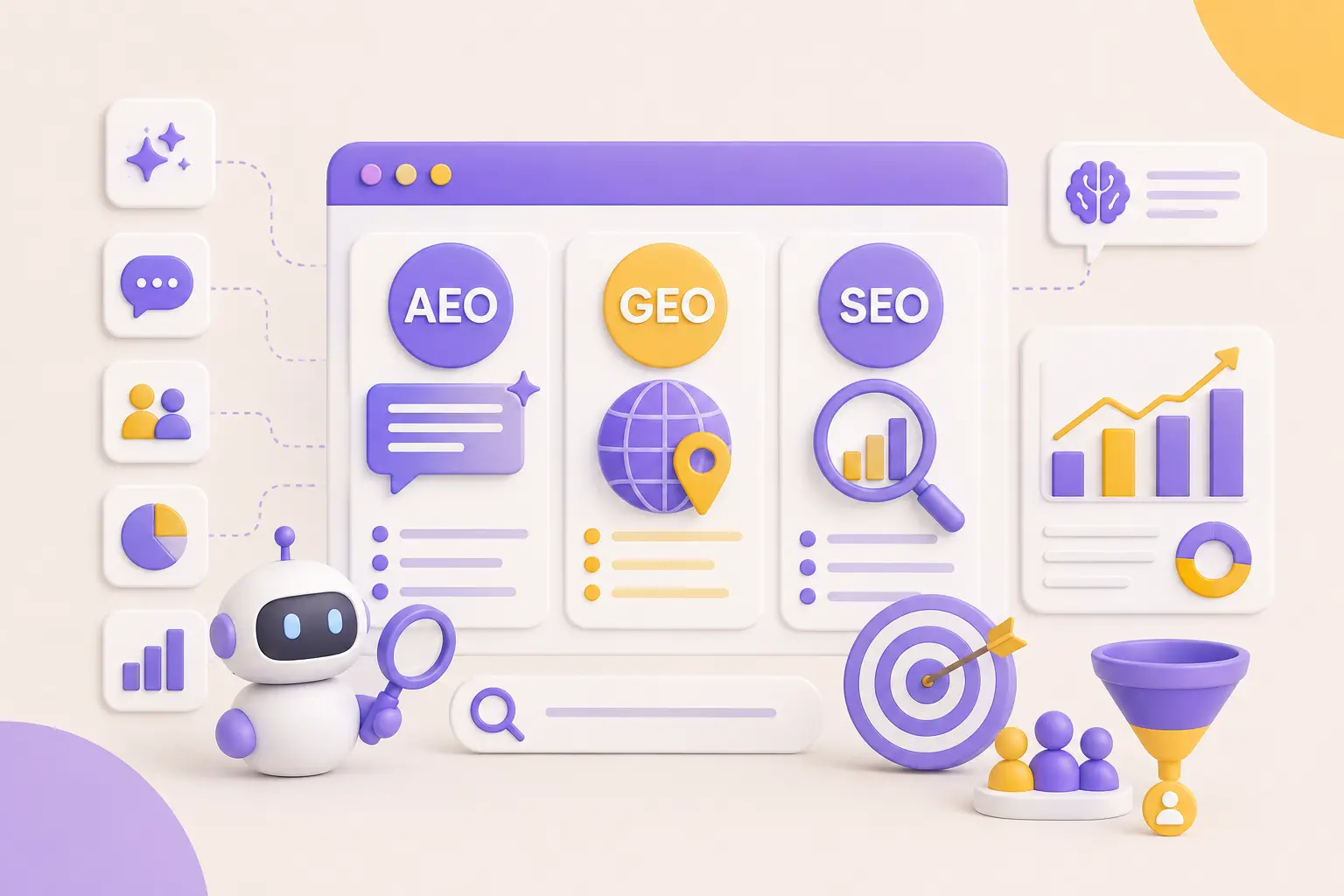
SEO and paid aren’t interchangeable, and treating them as one line item leads to bad calls. Organic search compounds: build the content once and it keeps capturing the questions buyers ask before they contact anyone. Paid buys speed and feedback: it’s the fastest way to test an audience, an offer, or a landing page and see what converts. Use paid to learn, use SEO to compound, and don’t judge either one by the other’s scorecard.
STAGE 03 Match content to where they are in the decision
Someone three weeks from buying and someone who just realised they have a problem need different things. Map content to the stage:
| EARLY | Guides, problem explainers, industry context. They’re learning, not shopping. Don’t pitch yet. |
| EVALUATION | Comparisons, case studies, implementation detail, honest “how it actually works” pieces. |
| DECISION | Pricing, demos, ROI examples, proof points, and one clear next step. |
The common mistake is publishing only top-of-funnel explainers because they pull traffic, then wondering why the traffic never becomes pipeline. A predictable engine needs content that captures commercial intent too, not just curiosity.
STAGE 04 Qualify, and agree the rules with sales
This is where most engines leak. More leads are not better leads. You need a clear way to separate curiosity from a real buyer. A simple screen:
→ Fit · Does the company match your ICP?
→ Need · Is there a problem you can actually solve?
→ Timing · Is something forcing a decision now?
→ Authority · Is this person part of the buying process?
→ Value · Is the deal worth the effort?
Score it so a junior can route a lead without guessing. Then agree the funnel stages with the people who carry a sales number, in writing: Lead → MQL → SQL → Opportunity → Closed-won, each with a definition and a rule for moving between them. When marketing celebrates 500 leads and sales sees 20 real opportunities, a shared definition is the thing that was missing.
And move fast. Response time is the most controllable lever you have on conversion, and a lead that waits a day is mostly cold by the time anyone calls. Set a follow-up SLA and hold it. Make the first touch feel like a conversation, not an autoresponder that fired because a form got filled.
STAGE 05 Nurture the ones who aren’t ready
Most people who raise a hand aren’t ready to buy this week. In B2B that’s normal: cycles are long, budgets have seasons, and there’s usually a committee. If your only two moves are “pass to sales” or “discard,” you’re throwing away most of what you paid to bring in.
Nurture is what makes the engine compound instead of resetting every month. Email and lifecycle sequences that stay useful, retargeting that keeps you visible, content that answers the next question they’ll have. The goal is simple: be the obvious call when the timing finally lands.
STAGE 06 Close the loop
This is the part that turns a funnel into an engine. Send sales outcomes back to the front. Which source produced deals that actually closed, not just leads that arrived? A campaign that brings 100 leads and closes two has a problem worth diagnosing: wrong audience, wrong offer, or a landing page writing cheques sales can’t cash. A campaign that brings 30 leads that consistently close deserves more money, not less.
That’s why revenue attribution beats lead volume every time. Reallocate monthly, moving budget toward what closes and cutting what only produces cheap leads that go nowhere, and the engine gets more efficient on its own. That compounding is the whole point of building one.
None of this works without measurement
Predictability is a measurement problem before it’s a marketing one. If you can’t see what happened, you can’t forecast what will. The minimum wiring:
→ Analytics that captures the whole journey, not only the last click, tagged consistently across every channel (GA4 for most teams).
→ A CRM that holds the truth about what closed, connected to your ad platforms so they optimize toward revenue rather than toward form fills.
→ Conversion data flowing back to Google and Meta, using server-side tracking and offline conversion imports where they fit, so the algorithms learn from deals instead of from cheap clicks.
Get this wrong and you’ll optimise confidently in the wrong direction: more leads, worse pipeline, no idea why. Get it right and every stage above gets sharper, because it’s finally being judged on the outcome that pays the bills. Setup specifics vary by stack, so it’s worth verifying yours before you trust the numbers.
| Where AI actually helpsAI is useful here for one thing above all: spotting patterns in your funnel that a person would miss. Fed clean data, it can help with audience segmentation, lead scoring, intent signals, forecasting, and telling sales who to call first. A model might notice that prospects who read a comparison piece, come back to the pricing page, then open a case study close at several times the base rate. That’s a signal you can act on, in both automated nurture and sales priority.Two honest limits. AI can’t remove market uncertainty; it makes better guesses, not guarantees. And it’s only as good as the data underneath it. Point it at a broken funnel with bad tracking and it will confidently optimise the wrong thing, faster. Fix the wiring first. |
What a mature engine looks like
You’ll know it’s working when it’s five things at once:
| → Repeatable · leads come from defined processes, not the occasional lucky month.→ Measurable · Every major stage has a number attached.→ Connected · marketing, CRM, sales, and revenue data look at the same truth.→ Optimizable · you can see where conversion is leaking.→ Scalable · mvccore budget produces more pipeline without rebuilding the thing. |
No tool or agency is the engine by itself. Strategy, clean data, positioning, and sales execution have to work together. The software just makes it run.
What quietly breaks predictability
| → Measuring leads instead of revenue. Cheap leads are easy to celebrate and easy to waste. Cost per closed customer is the number that matters.→ The wrong scorecard on creation channels. Hold a demand-creation channel to last-click and you’ll cut the thing that was quietly feeding your search results.→ Last-click attribution. It hands all the credit to the final touch and hides the channels that did the warming up. Believe it and you’ll defund your best assists.→ Small numbers. If you close 20 deals a year, one odd month swings the whole picture. The math still helps; just treat the output as a range and give it time to average out. Anyone promising point-accurate B2B forecasts on low deal volume is selling a certainty they don’t have. |
The first 90 days
You don’t build all six stages at once. Do it in order:
1. Write down the funnel math and your current conversion rates, even rough ones. You’ll learn more from the gaps than from the numbers themselves.
2. Fix the wiring. Analytics and CRM talking to each other, conversions flowing back to the ad platforms.
3. Set the qualification definitions and a follow-up SLA. This alone usually lifts conversion before you spend another rupee on media.
4. Then, and only then, turn up spend on the channels the loop tells you are working.
An engine you can forecast beats a burst of leads you can’t. Build the boring version. It’s the one that compounds.
FAQs
What’s the most important part of B2B lead generation?
Targeting. Get the audience wrong and more traffic just brings more of the wrong people. Everything downstream inherits the quality of your ICP, so define it before you spend on channels.
How can B2B companies generate leads consistently?
Build repeatable acquisition channels, match content to buying intent, use clear qualification criteria, keep follow-up disciplined with an SLA, and measure on pipeline and revenue rather than lead count.
Should we focus on SEO or paid advertising?
Usually both, for different jobs. SEO compounds over time and captures demand that already exists. Paid media buys speed, testing, and scale. Judge each channel on the job it’s doing, not on the other’s scorecard.
How do you measure B2B lead generation success?
Qualified leads, opportunities created, stage-to-stage conversion rates, customer acquisition cost, pipeline value, average deal size, and sales-cycle length. Lead volume on its own tells you almost nothing about revenue.
Can AI make B2B lead generation predictable?
It helps with forecasting, segmentation, scoring, and personalisation, but it can’t remove market uncertainty. It works when it sits on reliable data and a well-defined funnel, not instead of them.
The real test is simple. Can you look at next quarter’s pipeline and say where it’ll come from, what has to convert, and which number needs to move? When you can answer that, lead generation stops being guesswork and becomes something you manage.